

Hearing conversations, television, footsteps, or everyday noise coming from the next room is frustrating. But that becomes even more annoying when you’re trying to work, sleep, or relax. If sound is travelling through your walls, simply adding drywall may not be enough to solve the problem.
Sound control depends on the entire wall assembly, including the drywall, insulation, framing, number of layers, and how well gaps and openings are sealed. Using the right combination of these elements can reduce the amount of noise travelling between rooms and workspaces.
So, what can you actually do to reduce noise through a drywall wall? Let’s take a look at the options and what can make the biggest difference.
Key Takeaways
- Drywall alone may not be enough to reduce noise
- Insulation can help reduce sound travelling through wall cavities
- Multiple drywall layers can add mass to the wall, improving sound control
- Framing can limit the transfer of sound vibrations through the wall
- Sealing gaps and openings also limit sound from passing through
What Causes Sound to Travel Through Drywall Walls?
Sound can travel through a wall in a few different ways. For example, when someone watches TV, or makes noise in one room, that sound creates vibrations that can move through the drywall and the wall cavity. If the wall is thin or has gaps around outlets, doors, pipes, or other openings, then it becomes much easier for sound to travel to the next room. The framing can also play a role here because vibrations can travel through the studs and other parts of the wall. That’s why, when it comes to sound control, factors like insulation, framing, drywall layers, and how the wall is sealed all matter. They all work together to reduce noise.
Does Drywall Help With Soundproofing?
Yes, drywall can help limit sound, but it’s only one part of the wall assembly. Adding more mass to the wall makes it harder for sound vibrations to pass through. But when you’re trying to get better sound control, the drywall needs to work together with the insulation, framing, and other parts of the wall.
Ways to Reduce Noise Between Rooms and Workspaces
The way the wall is built and the materials used inside it influence how much sound travels through. Here are some of the main ways we can improve sound control:
Add More Than One Layer of Drywall
Adding more than one layer of drywall increases the overall mass of the wall, which can limit the amount of sound passing through. In some projects, using multiple layers can provide better sound control than a single layer. However, how many layers will be used depends on the wall and the amount of sound reduction you need. That’s why we always look at the space and the existing wall before deciding what approach makes sense.
Use Sound-Reducing Insulation
Inside the wall cavity, insulation absorbs some of the sound moving through the space between the studs. This gives sound less room to travel through the wall and can make conversations, voices, and everyday noise less noticeable in the next room.
For soundproofing work, we may use insulation products suited for acoustic applications. This can include noise-reducing panels, spray foam, batt insulation, or blown-in insulation. The right approach depends on how it is installed, the existing framing and the wall setup.
Metal or Resilient Framing Systems
Sound vibrations can travel through the studs and transfer into the drywall on the other side of the wall. Metal or resilient framing systems are used to reduce this transfer by creating more separation between the drywall and the framing. The choice between these systems depends on the existing wall, the type of space, and the level of sound control you need. The framing also needs to work with the insulation and drywall layers to create the right wall assembly.
Seal Gaps and Openings
Gaps and openings in the walls are also one reason sound travels between rooms and workspaces. Sound can also pass through small gaps around electrical outlets, pipes, doors, ceilings, and other openings in the wall. Even if the drywall and insulation are installed properly, these gaps can still let noise travel into the next room. Sealing these areas properly is an important part of the work. When a wall is well-sealed, it leaves fewer gaps for sound to travel through.
Acoustic Ceiling Systems
Sound can travel both upward and downward through a building, and a standard drywall ceiling may not provide enough sound control in some spaces. Acoustic ceiling systems use porous and fibrous materials to absorb sound more effectively. This method is useful in multi-story homes, offices, or commercial spaces where sound from the floor above or below is a concern. When choosing the right acoustic ceiling system, consider the ceiling height, the space, and how much sound absorption you need.
Use Sound-Dampening Compounds
Professionals can apply sound-dampening compounds between layers of drywall to absorb some of the vibrations created by sound. They can be useful when you’re building a new wall or adding another drywall layer to an existing wall. For better sound control, these compounds can be combined with insulation, framing, and proper sealing around gaps and openings.
How to Soundproof a Wall Between Two Rooms
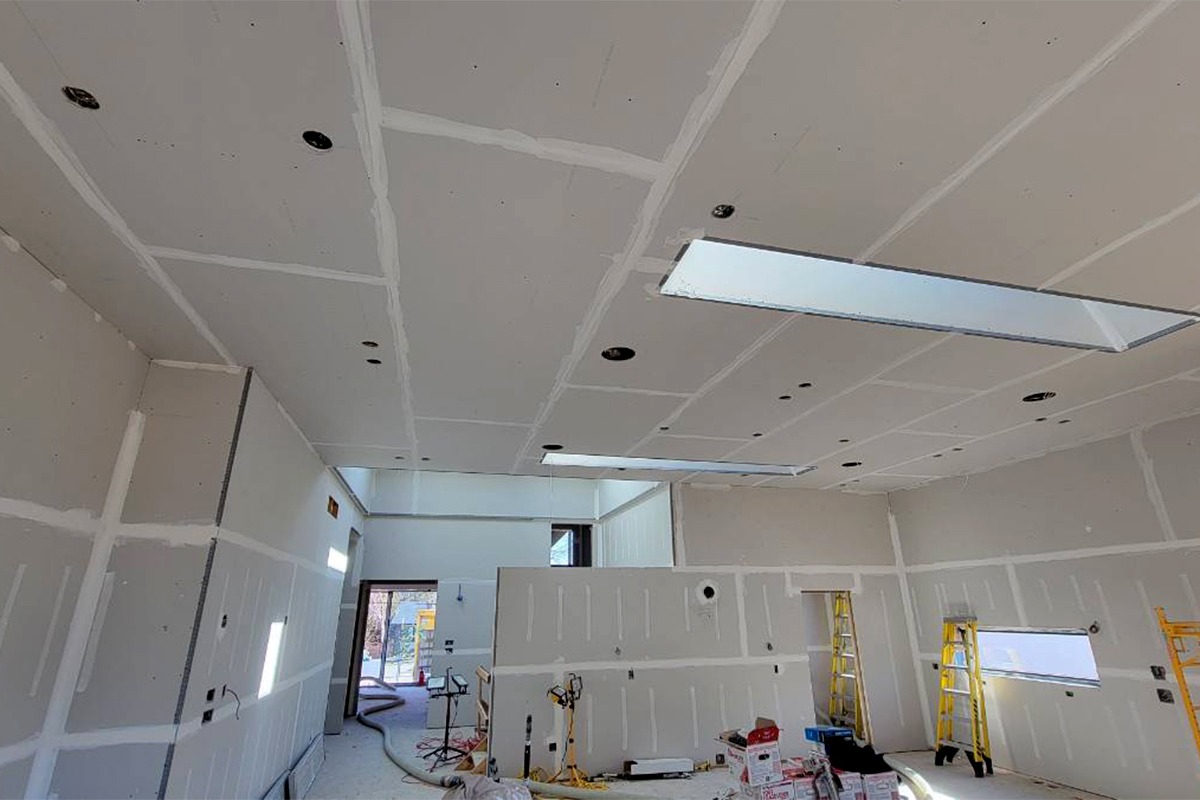
For soundproofing, the first step should be to look at the existing wall to determine where the noise is coming from and what the wall is made of. The wall may need additional insulation, another layer of drywall, framing changes, or sealing around gaps and openings.
Once that’s assessed, the appropriate insulation and drywall can be installed depending on the level of sound control needed. If there are any gaps around outlets, pipes, or doors, they should also be sealed properly.
If you’re working on an existing wall, the approach can be different from a new construction project. In some cases, the wall may need to be opened so the soundproofing work can be done effectively. The drywall is then installed, taped, finished, and prepared for painting.
When Should You Consider Professional Drywall Soundproofing?
Professional soundproofing is worth considering if:
- You can hear conversations or TV through a shared wall.
- You hear noise from another room, and it’s affecting your sleep or work.
- You need more privacy in a home office or meeting room.
- Footsteps or noise from another floor are becoming a problem.
- You need better sound control in your workplace, between meeting rooms, offices, or shared workspaces.
- You’re building or renovating a space and want better control over sound.
Get the Right Drywall Soundproofing for Your Space
If constant noise has become a problem in your home or workplace, the right soundproofing approach can help create a quieter and more comfortable space. Centennial Drywall Inc. can assess your space and help you choose the right combination of drywall, insulation, framing, and other sound-control options.
Get in touch with our team to discuss your project and find an approach that fits your space and needs.