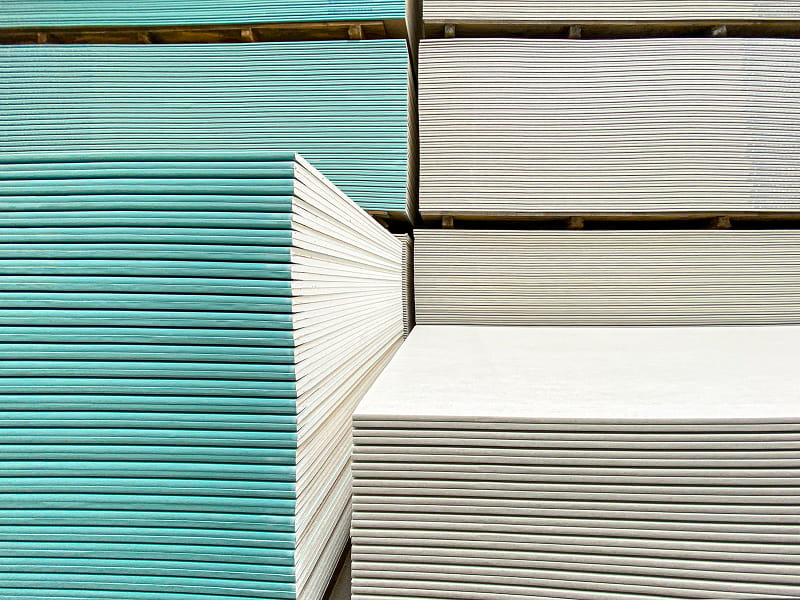
Standard drywall and water don’t mix. The paper facing absorbs moisture like a sponge, the gypsum core softens, and within weeks you’ve got mould growing behind your freshly painted basement wall. If you’re renovating a bathroom or finishing a basement anywhere in the Greater Toronto Area, the type of drywall board you choose is not an afterthought, it’s one of the most consequential decisions in the entire project.
The problem is that “moisture-resistant drywall” isn’t a single product. It’s a category, and the options within it, green board, purple board, paperless board, cement board, each have different strengths, different price points, and different places where they belong. Choosing wrong doesn’t just waste money. It creates conditions for mould, rot, and structural damage that might not show up for a year or two.
Key Takeaways
- Standard white drywall should never be installed in high-moisture areas like bathrooms or below-grade basements.
- Green board handles humidity but is not waterproof, it cannot be used directly behind shower tile.
- Purple board offers superior mould resistance across the entire board (face, back, and core).
- Cement board or waterproof substrates are required behind tile in wet areas per Ontario building practices.
- A successful GTA basement strategy accounts for both bulk water and vapour management.
What Is Standard Drywall and Why Does It Fail in Wet Areas?
Standard drywall, the white-faced board you see on most walls, is made of a gypsum plaster core sandwiched between layers of paper. The paper is the weak link; when it absorbs moisture, it becomes a food source for mould.
In a GTA basement with poor vapour management, visible mould can establish itself on standard drywall in as little as 48–72 hours after a moisture event (Source: CMHC). Southern Ontario’s humidity and cold foundation walls create a “mould incubator” if standard drywall is used incorrectly.
What Is Green Board Drywall?
Green board is the common name for moisture-resistant (MR) gypsum board. Its paper facing is treated with wax or silicone to slow moisture absorption.
- Pros: Resistant to humidity and incidental moisture.
- Cons: Not waterproof; not rated for direct water contact or as a shower tile backer.
Where it makes sense in the GTA: Bathroom walls away from the shower, powder rooms, laundry rooms, and kitchen areas near sinks.
What Is Purple Board Drywall?
Purple board (like Gold Bond® XP®) takes protection further. It uses a fibreglass mat or specially treated paper that resists moisture and mould through the entire board, including the core. It earns a perfect 10 on the ASTM D3273 mould resistance test (Source: National Gypsum Company).
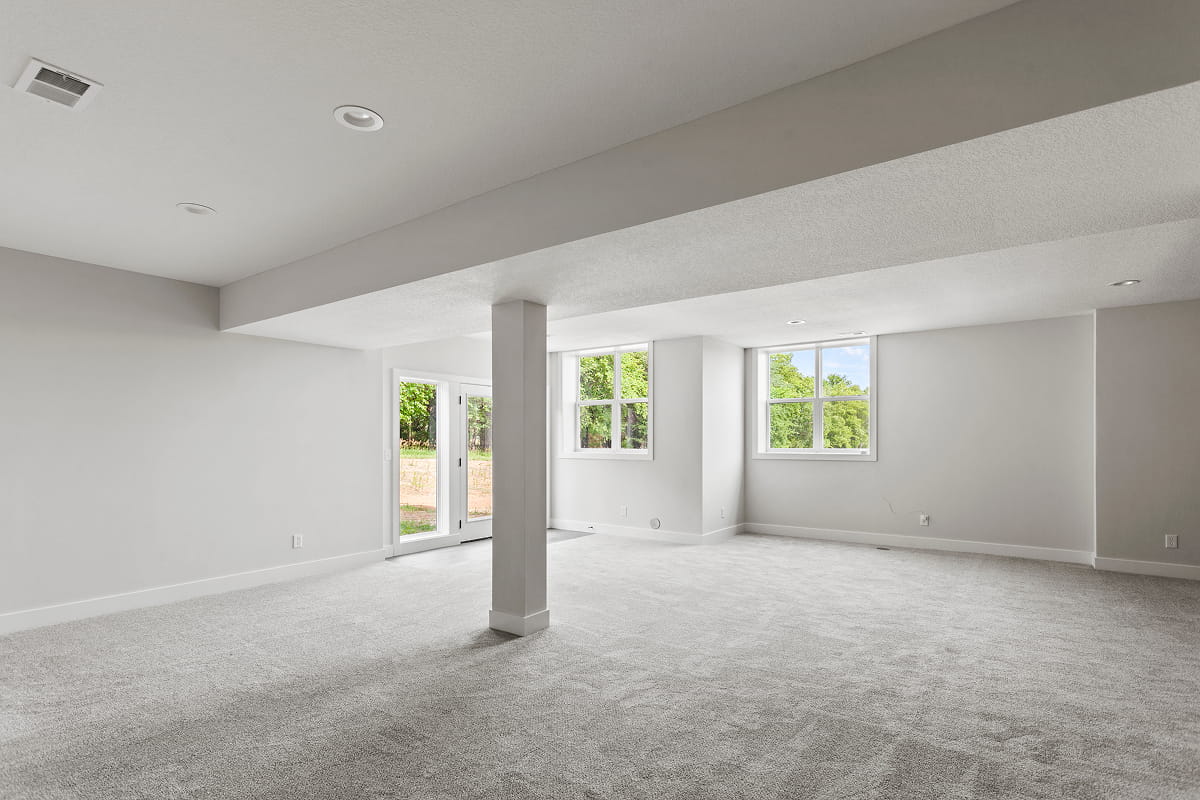
Where it makes sense in the GTA: Below-grade basement walls, full bathroom installations, and spaces with chronically elevated humidity.
Can You Use Green Board or Purple Board Behind Shower Tile?
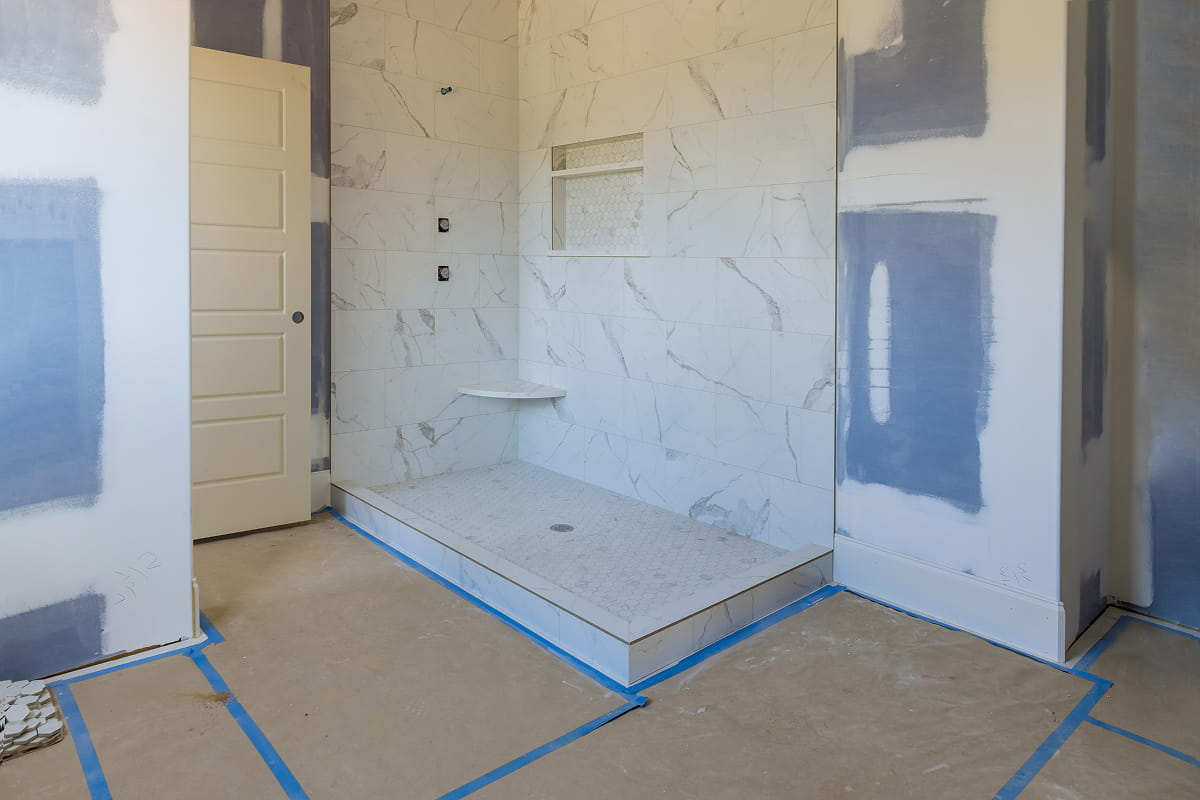
No. This is a common mistake. Grout is not waterproof. Water eventually penetrates to the substrate. If that substrate is gypsum-based, it will fail. Behind shower and tub tile, you need a true waterproof substrate like:
- Cement board (e.g., Durock, Hardiebacker)
- Foam backer board (e.g., Schluter Kerdi-Board)
Green Board vs. Purple Board vs. Standard Drywall: Head-to-Head
| Feature | Standard (White) | Green Board (MR) | Purple Board (Mould & Moisture) |
|---|---|---|---|
| Facing | Recycled paper | Wax-treated paper | Fibreglass mat / Treated paper |
| Mould Resistance | 0–2 (Poor) | 6–8 (Moderate) | 10 (Highest) |
| Use Behind Shower Tile? | Never | Never | Never (Use Cement Board) |
| Approx. Cost Premium | Baseline | +15–25% | +30–50% |
What About Paperless Drywall?
Paperless drywall replaces paper with a fibreglass mat. Because there is no organic paper, there is nothing for mould to eat. However, it requires a full skim coat (Level 5 finish) because the mat texture is visible through paint. For many basement drywall installations in Toronto, this extra labour is a worthwhile investment for long-term health.
What Does a Proper GTA Basement Wall Assembly Look Like?
Choosing the right board is only half the battle. A professional assembly includes:
- Concrete Foundation: Cleaned and repaired.
- Insulation: Spray foam or rigid foam applied directly to concrete as a vapour barrier.
- Framing: Metal stud framing is ideal as it won’t rot or support mould.
- Drywall: Purple or paperless board for maximum protection.
How Does Ontario’s Climate Specifically Affect Basement Moisture?
The GTA faces a bidirectional moisture cycle. In summer, humid air condenses against cool foundation walls. In winter, heated indoor air pushes moisture toward the cold exterior. This recurring cycle is why we see so many failures in our projects in the GTA where standard materials were used by previous installers.
Questions to Ask Your Contractor Before a Renovation
- What goes behind the tile in the shower? (The answer should never be gypsum).
- How are you managing vapour on the basement walls?
- Is the drywall taping and finishing crew experienced with moisture-resistant substrates?
A drywall contractor who handles the full scope can ensure these layers are coordinated perfectly.
Ready to Get It Done Right?
Centennial Drywall has been protecting homes across the GTA from mould and moisture for years. We recommend the right board for the right room, ensuring your renovation lasts as long as your home. Get in touch for a free quote today.
SOURCES CITED:
Canada Mortgage and Housing Corporation (CMHC), Moisture and Air Guide. https://www.cmhc-schl.gc.ca
National Gypsum Company, Gold Bond® XP® Technical Data. https://www.nationalgypsum.com